Birthday Scavenger Hunt Ideas for Every Age and Every Setting
Birthdays are one occasion where the pressure to create something genuinely memorable is real — and where the gap between a forgettable gathering and a story people retell for years often comes down to a single decision about how to structure the time. A scavenger hunt is one of the most reliable formats available, for a straightforward reason: it turns guests from an audience into participants. Instead of watching an event unfold, people are inside it, making decisions, competing, laughing at their own mistakes, and experiencing something together rather than in parallel.
What makes birthday scavenger hunts particularly versatile is how well the format scales across age, setting, and group size. The same core mechanic — teams working through a sequence of challenges toward a shared goal — produces engagement whether the participants are seven, thirty-five, or sixty. The variables that change are challenge difficulty, physical format, and the degree of personalization. This guide covers what works at each stage of life, how to structure a hunt for different settings, and how GPS technology has expanded what birthday scavenger hunts can look like for groups of any size.

Why Scavenger Hunts Work So Well for Birthdays
Most birthday party activities are either passive — guests watch, listen, or wait — or narrowly competitive in ways that produce winners and losers rather than shared experience. Scavenger hunts avoid both problems. Every participant is active throughout; the team structure means that even guests who would not individually excel at competitive activities contribute meaningfully; and the shared narrative of the hunt — the clue that stumped everyone, the photo mission that produced an absurd image — becomes a reference point for the group long after the event ends.
Personalization amplifies this effect significantly. A birthday scavenger hunt built around facts, memories, and locations meaningful to the birthday person creates a layer of emotional resonance that generic activity formats cannot replicate. Guests who barely know each other find themselves collaborating over details of the celebrant’s life, which accelerates connection in a way that free-form socializing rarely achieves in the same time frame.
Birthday Scavenger Hunt Ideas by Age Group
Young Children (Ages 5–8): Sensory, Simple, Celebratory
For young children, the hunt itself is the reward — the anticipation of finding the next clue, the delight of a physical discovery, the energy of running from one location to the next. Complexity should be minimal: clues delivered as short rhymes, objects hidden in predictable locations, physical tasks that involve movement rather than abstract reasoning.
Theming matters at this age in a way it does not for older groups. A fairy tale hunt where each clue is ‘from’ a different storybook character, a dinosaur dig where clues are buried in a sandbox, a superhero mission where each challenge unlocks a new power — the narrative frame holds attention and adds ceremony to each discovery. Keep teams small (two or three children) to prevent stronger participants from dominating, and plan for a collective prize at the end rather than a single winner.
Indoors, clue locations should use objects the children know well: the refrigerator, the bookshelf, the birthday cake table, the front door. Outdoors, chalk markings, colored ribbons, or laminated clue cards at garden landmarks work well and add a visual dimension that makes the hunt feel designed rather than improvised.
For organizers looking for ready-made thematic hunt inspiration for young children, platforms like Soekky Stories (soekkystories.nl) demonstrate how narrative-driven scavenger hunts can be built around a story arc that carries children from clue to clue with genuine emotional investment in the outcome.
images, audio, and video to each checkpoint, creating a multimedia experience at each stop without requiring participants to carry printed materials.
A concrete example of this at scale: MijnSpeurtochten, a Dutch scavenger hunt platform built on Locatify’s infrastructure, has used this exact model to deliver GPS-anchored outdoor hunts across multiple locations — demonstrating how the format extends from individual birthday events to recurring public experiences. Full case study: locatify.com/resources/case-studies/mijnspeurtochten
Older Children and Tweens (Ages 9–13): Challenge, Complexity, Competition
This age group is ready for genuinely challenging clues — riddles that require real thinking, observation tasks that demand attention to detail, and competitive structures where the outcome is uncertain until the final moments. Teams of three to four work well; mixed teams that cut across school friend groups can accelerate social connections among guests who know the birthday person from different contexts.
Photo and video missions are particularly effective at this age. Challenges that require teams to recreate a famous photograph, perform a thirty-second video challenge, or document a specific observation at a location add a creative dimension that pure riddle hunts lack. For outdoor events, a neighborhood hunt with GPS-anchored checkpoints — using a platform like TurfHunt by Locatify (turfhunt.locatify.com) — allows the organizer to set challenges at specific locations, monitor team progress in real time, and build competitive momentum through a live leaderboard visible to all teams.
Personalization at this age often takes the form of trivia: how well do you know the birthday person? Challenges that require teams to answer questions about the celebrant — their earliest memory, their most embarrassing moment, their hidden talent — create laughter and connection while giving the birthday person a starring role in the experience rather than simply serving as its occasion.

Teenagers (Ages 14–18): Freedom, Creativity, Social Stakes
Teenagers require a different approach to buy-in. The format needs to feel genuinely fun rather than organized by an adult who has decided what fun looks like. The most successful teenage birthday scavenger hunts share two characteristics: they allow creative latitude within the challenge structure, and they produce content — photos, videos, moments — that participants actually want to share.
GPS-powered urban hunts work exceptionally well for this age group. A hunt through a city neighborhood, a shopping district, or a local park with GPS-triggered challenges gives teenagers the autonomy of moving through real public space while the challenge structure prevents the event from dissolving into unstructured wandering. Photo missions that require creative interpretation — ‘take a photo that shows friendship without showing any people’ — produce results that become the event’s shared artifacts and often circulate well beyond the day itself.
Challenge difficulty should be calibrated to create genuine uncertainty. If the outcome feels predetermined, competitive energy dissipates. A well-designed teenage birthday hunt should have teams within reach of each other on the leaderboard until the final challenge, with a score reveal that produces a genuine reaction.
Adults (Ages 21+): Wit, Nostalgia, Urban Adventure
Adult birthday scavenger hunts are most successful when they combine a social occasion with an experience that feels deliberately designed rather than improvised. For milestone birthdays — thirtieth, fortieth, fiftieth — the format has particular resonance because it can be built around the celebrant’s history in ways that transform the hunt into a biography in challenge form.
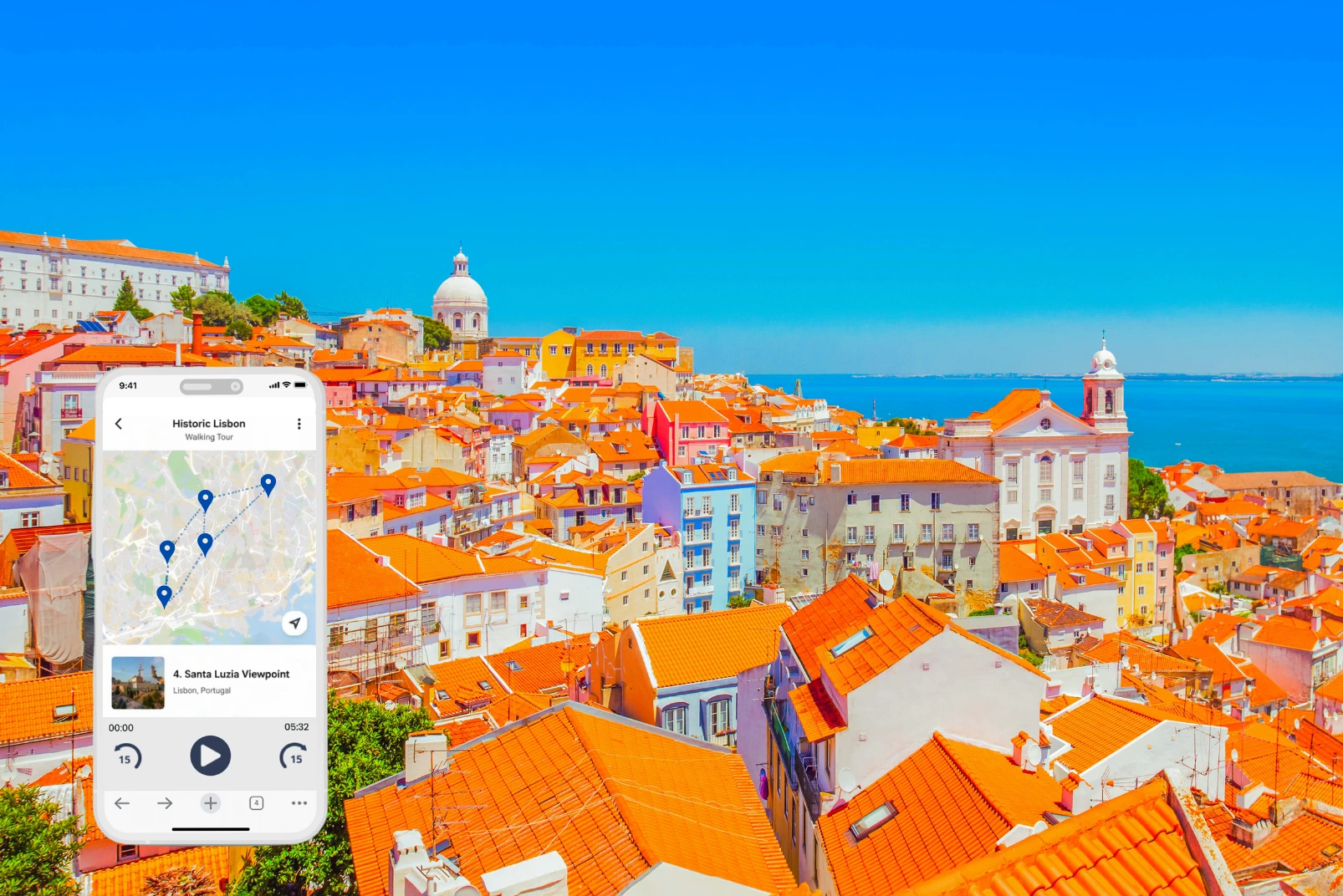
Urban GPS hunts are the strongest format for adult birthday groups. A route that visits locations meaningful to the birthday person — the street they grew up on, the restaurant of a first date, the office of their first job — anchors challenges in personal history while giving teams a genuine navigation task. TurfHunt’s GPS-triggered format allows organizers to build this kind of biographical route without technical expertise, placing challenges at precise coordinates and attaching photos, audio, or video content to each location.
For indoor adult birthdays — house parties, private dining events, venue-based celebrations — virtual and quiz-based formats deliver comparable energy. A ‘How Well Do You Know [Name]?’ challenge sequence, delivered through a shared app, requires no outdoor space and scales cleanly to any group size. Add a physical team task or two — a group drawing challenge, a collaborative puzzle — to break up the screen-based format and maintain physical engagement.
Birthday Scavenger Hunt Ideas by Setting
Outdoor GPS Hunts: Maximum Engagement, Any Scale
Outdoor GPS scavenger hunts are the highest-engagement format available for birthday events with freedom of movement. The combination of physical navigation, GPS-triggered challenges at specific locations, real-time scoring, and photo documentation creates an experience that sustains energy across the full duration of the event — typically ninety minutes to three hours depending on group size and route length.
Design the route around the birthday person’s geography. Locations that carry personal significance transform the navigation task into a form of storytelling: arriving at a specific coordinate and finding a challenge about what happened there produces a different quality of engagement than a generically interesting location. Platform tools like TurfHunt’s Locatify Builder allow challenge designers to attach text, images, audio, and video to each checkpoint, creating a multimedia experience at each stop without requiring participants to carry printed materials.

Indoor Hunts: Photo Missions, Quizzes, Creative Tasks
Indoor birthday hunts require a different challenge architecture. Without GPS navigation as a structural element, the challenge sequence itself must generate movement and variety. Photo missions — challenges that send teams to specific rooms or objects within a venue — provide the indoor equivalent of GPS waypoints, creating purposeful movement through a defined space.
The most effective indoor birthday hunts mix three or four challenge types: knowledge questions about the birthday person, physical team tasks, photo or video missions, and creative challenges with open-ended responses. This variety prevents any single format from becoming repetitive and ensures that different participants’ strengths are engaged at different points in the hunt.
Hybrid and Virtual Formats
For birthday celebrations that include remote participants — friends or family joining from a different city or country — hybrid formats that combine in-person and virtual participation are increasingly common. TurfHunt’s virtual challenge format allows remote participants to join the same game through the app, completing adapted versions of challenges from their own location while competing on the same leaderboard as the in-person teams.
This format has particular value for milestone birthdays where the full guest list cannot be physically assembled. A fiftieth birthday hunt with teams in three different cities, competing on a shared leaderboard and submitting photo evidence of their completed challenges, creates a genuine shared experience across geographic distance in a way that a video call cannot replicate.
For families looking to create a birthday experience, TurfHunt (https://turfhunt.locatify.com/
) offers an easy, ready-to-use solution. For organizations seeking a fully dedicated setup for birthdays or similar events — including a custom-named app, tailored visuals, and a reusable challenge framework — Locatify’s Branded Outdoor Adventure App provides a more advanced alternative: locatify.com/outdoor-adventure-app/
Designing a Birthday Scavenger Hunt: A Practical Framework
Start with the birthday person, not the challenges. The strongest birthday hunts are built outward from a central question: what are the facts, memories, places, preferences, and stories that define this person? The answer to that question is the raw material for challenge design. Challenges that draw on real personal history produce moments that feel specific rather than generic — and specific moments are the ones that get remembered.
Plan the arc of the hunt deliberately. Opening challenges should be accessible and energizing, designed to orient teams and build confidence rather than eliminate participants early. The most demanding challenges belong in the middle third, when competitive positions have formed and teams are fully engaged. The final challenge should build toward a score reveal and a collective moment — a photo submission where all teams capture the same subject, a question whose answer only the birthday person can confirm — that brings the group back together at the end.
Brief participants clearly and debrief after. Before the hunt begins, explain the scoring system, the time limit, and the submission format. After the hunt ends, review the photo submissions as a group before revealing the scores — the collective review of what teams captured during the hunt often produces as much laughter as the competitive outcome, and it extends the shared experience beyond the moment of score reveal.
Conclusion
Birthday scavenger hunts work across every age group and setting because they solve the fundamental challenge of birthday party design: they make every guest an active participant rather than a passive attendee. The specific format — GPS-powered outdoor hunt, indoor photo mission, virtual quiz challenge — matters less than the degree of personalization and the quality of the challenge arc. A hunt built around the birthday person’s actual history, calibrated to the group’s age and energy, and structured to produce a genuine competitive finish delivers an experience that no passive entertainment format can match.
For practical challenge ideas calibrated by age and occasion, the related articles below offer specific examples and ready-to-use frameworks.