
Treasure Hunts for Corporate Events: Engaging Teams Outdoors
Companies spend billions annually on team building—approximately $4.7 billion in 2024 alone across the United States. Yet many initiatives fall flat. Expensive retreats conclude, fancy venues empty, and employees return to their desks with relationships unchanged. The statistics reveal a hard truth: most team building activities fail because they prioritize entertainment over genuine connection. In contrast, treasure hunts for team building offer something fundamentally different. When employees collaborate to solve puzzles, navigate terrain, and work toward shared objectives under mild time pressure, they experience authentic teamwork that creates lasting change. Unlike passive lectures or forced icebreakers, a treasure hunt for team building activates the neurological and psychological conditions where real connection happens.
The evidence is compelling. According to 2025 research on team building effectiveness, companies that implement well-designed team building activities report a return of $4 to $6 for every dollar invested (https://groupdynamix.com/roi-of-team-building/, https://high5test.com/team-building-statistics/). Research on employee engagement from Gallup shows that teams with high engagement levels—which team building activities like treasure hunts help foster—demonstrate 23% higher profitability and 18% increased productivity compared to disengaged teams (https://www.gallup.com/workplace/285674/improve-employee-engagement-workplace.aspx). These activities create measurably stronger workplace relationships that persist months after the event. Understanding how to design and execute effective treasure hunt activities matters for any organization serious about strengthening culture, improving retention, and creating the conditions where high performance becomes possible.

Why Treasure Hunts Transform Corporate Culture: Beyond Entertainment
The fundamental problem with most team building is that it treats engagement as a mood or temporary emotional state. Organizations book a fun day, employees smile, and then nothing changes. But research in organizational psychology reveals that lasting cultural change requires specific conditions: shared challenge under mild pressure, forced collaboration between people who don’t normally work together, collective problem-solving with visible progress, and achieved success that creates emotional memory.
A treasure hunt for team building uniquely activates all these conditions simultaneously. Unlike a generic team lunch or passive training session, a treasure hunt creates what researchers call “flow state”—a psychological condition where participants are fully engaged, appropriately challenged, and working toward clear objectives. When teams search for clues, solve riddles, navigate outdoor terrain, and race against time, barriers lower naturally. The senior vice president works alongside the recent hire. The marketing team collaborates with operations. Colleagues who rarely interact become teammates invested in collective success.
The outdoor environment amplifies these effects. Physical movement, fresh air, and natural surroundings activate different neural pathways than conference rooms. Employees experience genuine challenge and accomplishment. These memories—of working together, overcoming obstacles, achieving goals—create emotional bonds that persist far longer than generic team building activities. This is why organizations with highly engaged teams see 23% greater profitability and 21% higher productivity. When people genuinely trust and respect colleagues, work accelerates and innovates.
Corporate leaders increasingly recognize this. Rather than viewing team building as discretionary spending on morale, forward-thinking organizations treat treasure hunt activities as strategic investments in organizational capability. The ROI isn’t just measured in happiness scores; it’s visible in collaboration quality, decision-making speed, retention rates, and ultimately, bottom-line performance.
The Psychology of Team Challenge: Why Treasure Hunts Work
Neuroscience reveals that shared challenge creates profound bonding. When people face mild adversity together, the brain releases neurochemicals—particularly oxytocin and endorphins—that strengthen social bonds. This is why soldiers who serve together develop lifelong connections. Mountain climbers who reach summits together maintain friendships decades later. The same principle applies to workplace teams. When employees work together to solve treasure hunt clues, navigate terrain, and overcome obstacles, they’re literally changing their brain chemistry in ways that strengthen relationships.
Psychologically, treasure hunts also address core workplace challenges. Many organizations struggle with silos—departments that don’t collaborate, hierarchies that create distance, teams that operate independently. A treasure hunt breaks these patterns by design. Mixed teams solve clues together. Expertise from different domains proves valuable. The accountant’s attention to detail complements the salesperson’s creativity. The engineer’s systematic thinking combines with the designer’s innovation. These moments—where people see colleagues’ strengths in new contexts—fundamentally shift perception and create genuine appreciation.
Competence and autonomy matter psychologically too. Unlike training sessions where employees sit passively, treasure hunts require active contribution from everyone. Each person’s skills matter. Each decision impacts the group. This agency—the feeling that one’s actions matter and contribute to collective success—drives intrinsic motivation far more powerfully than external rewards or pressure. Organizations that create psychological safety through activities like treasure hunts see 76% higher engagement and 50% higher productivity compared to low-trust environments.
Designing Effective Outdoor Treasure Hunts: From Concept to Execution
The difference between a mediocre scavenger hunt and a genuinely transformative treasure hunt lies in deliberate design. Too many organizations throw together a basic list of items and hope engagement follows. Effective treasure hunts require strategic thinking about objectives, participant experience, difficulty calibration, and logistical precision.
Start with clarity about what you actually want to achieve. Do you want to improve cross-functional communication? Celebrate company values? Develop leadership skills? Strengthen departmental bonds? Your specific objective shapes every design decision. A hunt focused on leadership development will emphasize decision-making challenges and time pressure. A hunt designed to break silos will deliberately mix teams across departments and create challenges requiring diverse expertise. A hunt celebrating company culture will reference company history, values, and iconic moments.
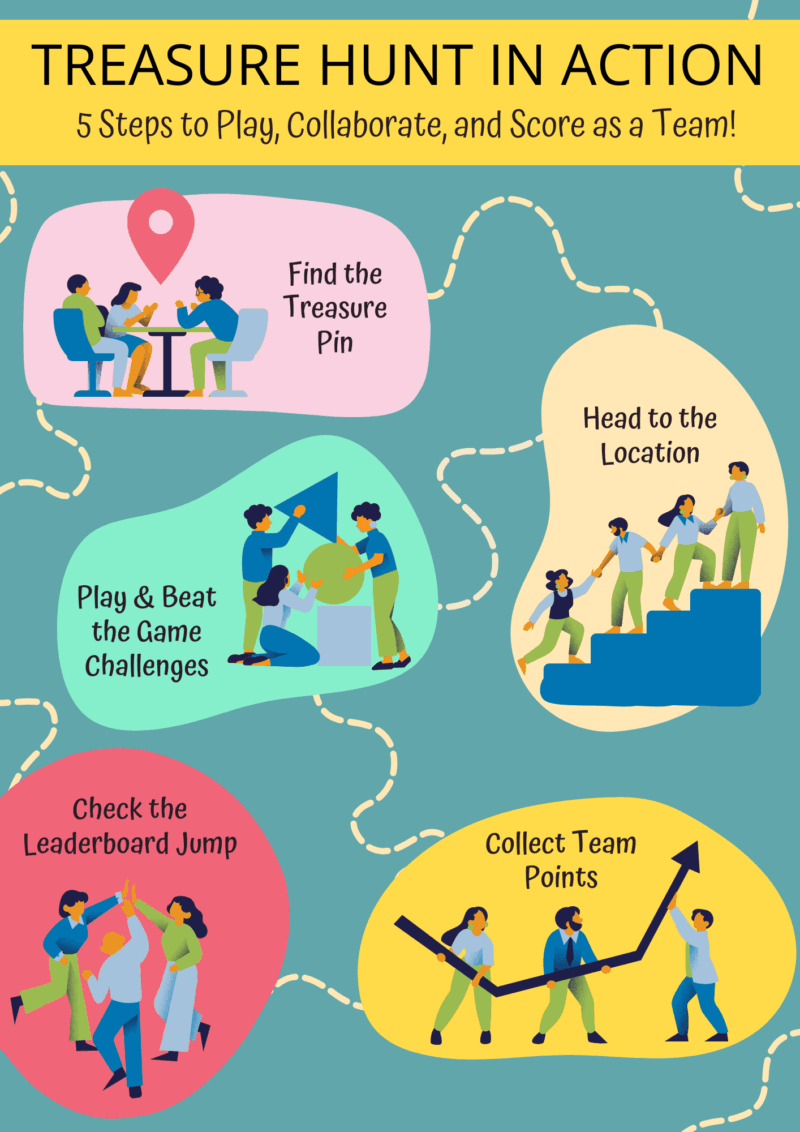
The most effective designs layer complexity deliberately. Basic hunts ask teams to find specific items. Sophisticated hunts require solving puzzles to discover clue locations. Teams photograph themselves at locations. They interview company leaders for information. They complete challenges at specific stations. They solve riddles that reveal the next destination. This layering keeps participants engaged, prevents boredom, and creates multiple opportunities for different strengths to shine. Someone excels at physical navigation. Another solves the riddle. A third takes compelling photos. Everyone contributes meaningfully.
Location selection matters significantly. A hunt through a park emphasizes movement and natural engagement. A hunt through company facilities reinforces culture and company knowledge. A hunt through the city creates discovery and teamwork. The setting should align with your objectives and terrain should challenge without overwhelming. Most effective hunts take 45 minutes to one hour—long enough to create bonding and genuine challenge, short enough to maintain energy and prevent fatigue.
Team composition deserves strategic attention too. Deliberately mix departments, experience levels, and personalities. Assign roles emphasizing different strengths—navigator, problem-solver, communicator, energizer. This structure ensures everyone has valuable contribution opportunities and creates genuine appreciation for colleagues’ diverse capabilities.
Crafting Clues, Calibrating Difficulty, and Managing Logistics
The quality of clues directly determines engagement level. Effective clues guide teams without providing obvious answers. Instead of “Find the fountain in the park,” try “Find the place where water falls upward in nature.” Instead of “Go to the conference room,” try “Enter the space where most difficult decisions get made.” This approach requires teams to think, discuss possibilities, and experience genuine discovery when they identify the correct location.
Difficulty calibration separates mediocre hunts from exceptional ones. Too easy and participants feel unchallenged and bored. Too hard and they experience frustration and give up. The sweet spot exists where teams need to work together, think creatively, and stretch slightly beyond comfort, but ultimately succeed. This requires testing your hunt beforehand. Walk every route. Time every challenge. Identify what could confuse or frustrate participants. Refine clues based on what you discover. This investment in preparation transforms participant experience significantly.
Logistics require meticulous planning. Establish clear boundaries about where teams can and cannot go. Ensure all locations are safely accessible. Arrange for check-in points where staff can verify progress and provide support. Have contingency plans for weather, injuries, or unexpected challenges. Communicate expectations and safety information clearly before the hunt begins. Provide timers and scoring mechanisms so teams understand progress and competition.
Post-hunt matters as much as the hunt itself. The debrief where teams share their experiences, discuss challenges overcome, and reflect on what they learned amplifies the impact. This 15-30 minute conversation transforms a fun activity into a genuine team building intervention that influences workplace behavior and relationships going forward.
The Business Case: Real ROI and Documented Success
The financial case for treasure hunting games for team building is increasingly undeniable. According to 2025 research from multiple sources, companies report a return of $4 to $6 for every dollar invested in well-executed team building initiatives. For organizations with 1,000 employees, this translates to hundreds of thousands of dollars in measurable business impact.
Tangible outcomes include reduced turnover (organizations with invested teams show 15-23% lower turnover rates), increased productivity (engaged teams demonstrate 18% higher productivity), improved collaboration (cross-functional projects move faster and create better outcomes), and enhanced decision-making speed (high-trust teams make decisions 32% faster). For knowledge-intensive industries, these improvements compound quickly. A team that moves faster, collaborates better, and retains institutional knowledge generates measurable revenue impact.
Real-world success stories validate the approach. Organizations ranging from tech companies to financial services firms to manufacturing leaders have implemented treasure hunt activities and documented results. Teams report stronger relationships, better cross-departmental understanding, and renewed commitment to organizational goals. Retention interviews consistently show employees remember and appreciate these shared experiences years after they occur.
What matters most is approach. Organizations that invest in strategic, well-designed treasure hunts aligned with specific business objectives see dramatically better ROI than those treating team building as generic entertainment. The difference between a $10,000 investment that generates $40,000-$60,000 in measurable value and one that generates nothing lies entirely in thoughtful design and clear objectives.
Best Practices That Ensure Success
- Establish clear business objectives first: Define specifically what you want to achieve—whether communication, cross-functional collaboration, leadership development, or cultural celebration.
- Design for strategic team composition: Deliberately mix departments and experience levels. Assign roles emphasizing different strengths so everyone contributes meaningfully.
- Create challenging, thoughtful clues: Clues should guide without providing obvious answers. Test everything beforehand to calibrate difficulty accurately.
- Plan logistics meticulously: Establish boundaries, verify safety, arrange check-in points, communicate clearly, prepare contingencies, and have staff present to support.
- Build in substantial debrief time: Reserve 15-30 minutes after the hunt for reflection and discussion about what participants learned and how the experience affects workplace relationships.
- Plan meaningful follow-up: High-impact team building includes reinforcement at 30, 60, and 90 days to ensure learning persists and translates into changed behavior.
- Measure outcomes systematically: Track engagement before and after. Monitor collaboration improvements, retention changes, and team dynamics shifts. Use data to refine future initiatives.
The Strategic Planning Framework: From Concept to Impact
Organizations that achieve the highest ROI from treasure hunt activities follow a structured planning framework. Begin with goal clarity—what specific business outcome do you want to achieve? Define success metrics before you start so you can measure actual impact rather than just participant satisfaction. Identify the target audience and assess their specific needs. A mature leadership team needs different challenges than a newly formed cross-functional project team.
Next comes the design phase where you align hunt objectives, activities, and difficulty with business goals and participant needs. Create compelling clues that reference company knowledge, location intelligence, and problem-solving requirements. Establish scoring systems that reward desired behaviors—collaboration, inclusion, persistence, creative thinking. Plan team composition deliberately. Arrange logistics carefully. Test everything at least once in real conditions.
Execution matters equally. Brief all staff, communicate expectations clearly, monitor progress, ensure safety, and maintain energy. The debrief transforms the experience into learning. Facilitate discussion about challenges overcome, teamwork lessons, and how participants will apply insights in daily work. Encourage participants to share observations about colleagues’ strengths and contributions.
Finally comes measurement and integration. Conduct follow-up surveys at 30, 60, and 90 days. Assess whether collaboration improved, whether people interact differently across departments, whether retention changed. Identify what worked and what to refine. Most importantly, reinforce lessons through management conversations and team discussions so the cultural impact persists beyond the event itself.
Conclusion: Transforming Corporate Culture Through Strategic Treasure Hunts
The evidence is clear: well-designed treasure hunt activities for team building create measurable business impact. When organizations invest strategically in creating conditions where employees collaborate authentically, overcome shared challenges, and experience genuine success together, they develop capabilities that drive profitability, retention, innovation, and competitive advantage.
The distinction between mediocre team building and transformative culture change lies entirely in intentionality. Thoughtful design aligned with specific business objectives, strategic team composition, challenging but achievable experiences, quality debrief and reflection, and systematic follow-up create conditions where behavior actually changes. One-off events are memorable outings. Strategically planned treasure hunts are catalysts for lasting cultural transformation.
Whether you’re a leader seeking to strengthen cross-functional collaboration, an HR professional tasked with improving retention, or an organization building culture in an increasingly distributed work environment, treasure hunt activities offer proven mechanisms for achieving those outcomes. The question isn’t whether your organization can afford to invest in strategic team building. The question is whether you can afford not to.
Design Your Transformative Treasure Hunt Today
Ready to transform your corporate culture through strategic treasure hunt activities? Discover how organizations worldwide are using innovative team building approaches to strengthen engagement, collaboration, and retention. Explore treasure hunt solutions designed for corporate teams and learn how to align team building with your specific business objectives.
For organizations considering treasure hunts for remote or hybrid teams, discover how virtual treasure hunt games transform distributed teams(link to new blog post). Learn practical strategies for office-based teams through office treasure hunt activities.(link to new blog post)