Student and Classroom Scavenger Hunt: Engagement That Transforms Learning
Traditional instruction works for some students. But when educators want genuine engagement and lasting learning, a classroom scavenger hunt activates something lectures alone cannot: curiosity-driven discovery. When students search for information, solve puzzles, and collaborate to find answers, they learn more deeply and retain knowledge longer.
A scavenger hunt for classroom use transforms learning from passive reception into active exploration. Students become investigators. They move purposefully through their environment, solve problems collaboratively, and experience authentic discovery—all while reinforcing educational content. Digital platforms have elevated this approach, adding location-based triggers, multimedia content, and real-time collaboration features that amplify engagement without losing the core appeal of discovery.
Understanding how to design and implement effective classroom scavenger hunt activities matters for any educator seeking to increase student engagement and improve learning outcomes.
Why Scavenger Hunts Work: Educational Psychology Behind Active Learning
Educational research consistently shows students learn more through active engagement than passive reception. When students search for information, they think critically about where to look, what questions to ask, and how to verify answers. This cognitive engagement strengthens neural pathways and creates deeper memory encoding.
A classroom scavenger hunt in classroom spaces leverages embodied cognition: physical movement combined with intellectual work enhances memory formation. Students don’t just memorize facts—they remember the experience of discovering those facts. Collaboration amplifies this effect. When students work in teams during a school scavenger hunt, they negotiate meaning, explain concepts to peers, and learn from diverse perspectives. Research on cooperative learning shows well-designed group activities increase achievement, develop social skills, and create inclusive environments where all learners contribute meaningfully.
Mystery and discovery—central to any scavenger hunt for classroom success—tap into intrinsic motivation. Students are driven by curiosity, not just grades. This creates genuine engagement that persists beyond the activity itself.
Designing Effective Classroom Scavenger Hunt Activities
The simplest classroom scavenger hunt template involves a list of items or information students must find. A literacy teacher might ask students to find “five rhyming words” or “a sentence describing emotion.” A history teacher might ask students to locate primary source documents answering specific questions.
More sophisticated hunts layer complexity intentionally. Instead of finding items, students solve puzzles unlocking the next location. Instead of independent searching, they coordinate across teams. Instead of text-based clues, they interpret images, decode messages, or watch videos directing them to new searches. A well-designed classroom scavenger hunt creates a narrative arc—students aren’t collecting random items; they’re following a story building toward meaningful conclusions.
Effective hunts align explicitly with learning objectives. Every clue reinforces specific knowledge or skills. They’re scoped appropriately—challenging but achievable within reasonable timeframes. They include built-in reflection where students articulate what they learned. They accommodate diverse learners through multiple participation pathways, different difficulty levels, and accessibility features.
How to make a scavenger hunt truly educational requires balancing engagement with substance—activities should be fun precisely because they’re pedagogically sound, not despite it.
Digital Tools Transform Classroom Scavenger Hunt Potential
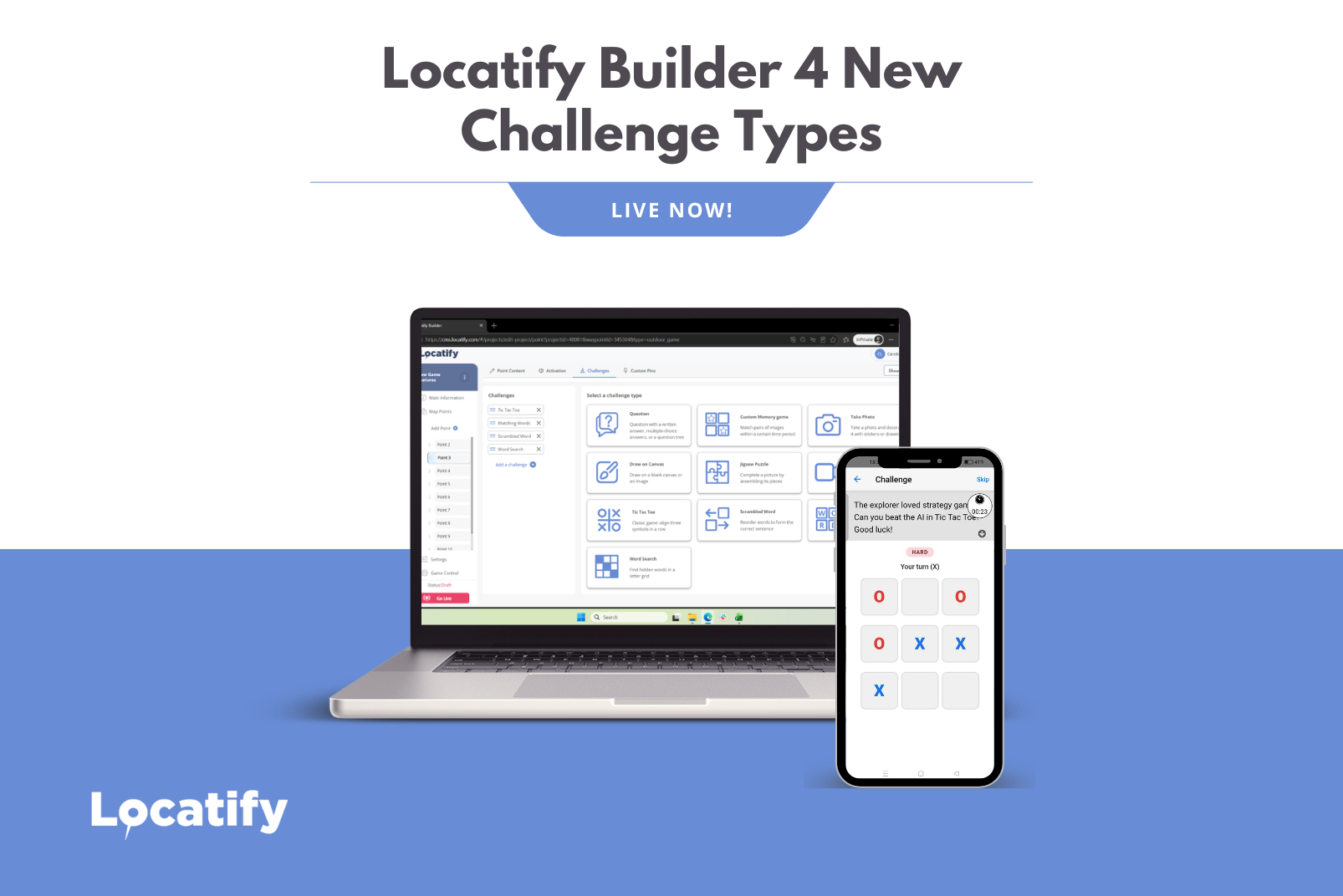
For decades, classroom scavenger hunt ideas relied on paper and teacher oversight. Digital platforms now offer capabilities that amplify educational potential significantly. A quality classroom scavenger hunt platform enables teachers to embed multimedia content, location-based triggers, real-time tracking, and collaborative features that paper systems cannot match.
Teachers can create classroom scavenger hunt clues with embedded videos, images, and audio—engaging multiple learning modalities simultaneously. Location-based technology recognizes when students arrive at specific locations and presents contextual information automatically.Collaborative features encourage teamwork while reducing coordination friction.
The best classroom scavenger hunt tools make technology invisible—it removes logistical barriers without removing the discovery that makes hunts engaging.
Real Success: How Schools Transform Teaching Through Scavenger Hunts
ESTEAM Project: Evidence of Impact
The ESTEAM project recognized that teachers needed practical, proven strategies for increasing engagement. Scavenger hunts emerged as powerful tools—pedagogically sound, adaptable across subjects, and immediately engaging for students. When teachers had access to well-designed tools and professional support, student outcomes improved measurably.
Teachers reported higher engagement levels, better retention of content, and more collaborative classroom environments. The success made scavenger hunts standard components of their instructional toolkit.
TeachOUT: Digital Innovation in Education
The TeachOUT project, developed as part of the ESTEAM-TeachOUT program, created a digital platform enabling sophisticated scavenger hunt design. Though TeachOUT itself is no longer available, it pioneered design principles now standard in educational technology. Teachers from the original program continue designing experiences through TurfHunt, bringing accumulated expertise about what makes hunts genuinely transformative.
When educators have tools designed for interactive learning, student engagement and learning outcomes improve significantly.
Classroom Scavenger Hunt Ideas: From Elementary to University
Elementary hunts build foundational skills. Students find “objects starting with ‘B'” (phonics), measure classroom objects (math), or observe schoolyard habitats (science). Middle school hunts build critical thinking—finding primary source documents about historical events, locating literary devices in texts, analyzing advertisements for persuasive techniques.
High school and university hunts become authentic learning experiences. A biology hunt might analyze environmental data. A political science hunt might track legislation through government systems. An architecture hunt might apply design principles to analyze buildings.
The beauty of classroom scavenger hunt templates is their adaptability—the same basic structure works across subjects and developmental levels, from elementary through university.

Best Practices for Implementation
- Align with clear objectives: Every clue reinforces specific skills or knowledge. Students articulate what they learned and why the hunt helped.
- Design for appropriate challenge: Challenging enough to engage cognitively, achievable within reasonable timeframes. Balance is critical.
- Build collaborative elements: Pair students strategically. Design challenges requiring different team members’ strengths. Create interdependencies where each person contributes.
- Include reflection: Debrief with students about learning, surprises, and what they’d do differently next time.
- Plan for diverse learners: Offer multiple participation pathways. Provide accessibility accommodations. Offer challenge variations for different ability levels.
- Use technology strategically: Digital tools should enhance learning and reduce logistical complexity, not replace pedagogy.
Creating Your First Classroom Scavenger Hunt
Define learning objectives first. Instead of “do a scavenger hunt about the American Revolution,” specify: “students will identify three causes of revolution and explain each cause’s impact.” Design structure: individual or team? Physical items or information? Which locations? How long?
Create clues guiding students without providing direct answers. “Where would you find photosynthesis information?” is more engaging than “Go to page 52.” Mix difficulty levels. Prepare materials and test your space. Run through the hunt yourself before students do—this reveals timing issues, confusing clues, and logistical problems.
How to do a scavenger hunt successfully requires thoughtful planning, but the investment pays dividends in engagement and learning outcomes.
Why This Matters
In an educational landscape shaped by standardized testing and screen fatigue, classroom scavenger hunts offer authentic engagement, physical movement, and collaborative problem-solving. Research consistently shows students learn more when actively engaged, moving physically, solving real problems, and collaborating with peers. Classroom scavenger hunt activities check every box.
They’re equitable—work across ability levels when designed thoughtfully. They’re flexible—adaptable to every subject and grade level. They’re powerful—capable of transforming student relationships with learning from passive reception into active discovery.
Conclusion
Classroom scavenger hunts work because they tap into how humans actually learn: through exploration, collaboration, and experience. When students search for information, move purposefully, solve problems with peers, and reflect on discoveries, deeper learning happens.
Thoughtfully designed and skillfully implemented, scavenger hunts transform classrooms into spaces of genuine discovery—and genuine learning. Whether you’re making literacy engaging in elementary, history feel like detective work in high school, or your discipline feel authentic in university, scavenger hunts offer a powerful strategy grounded in educational research.
Ready to Get Started?
Transform your teaching with interactive scavenger hunt experiences. Explore TurfHunt’s classroom solutions designed specifically for educational environments.
Learn more about how scavenger hunt apps transform education and discover how schools worldwide are using interactive hunts to increase engagement and improve learning.