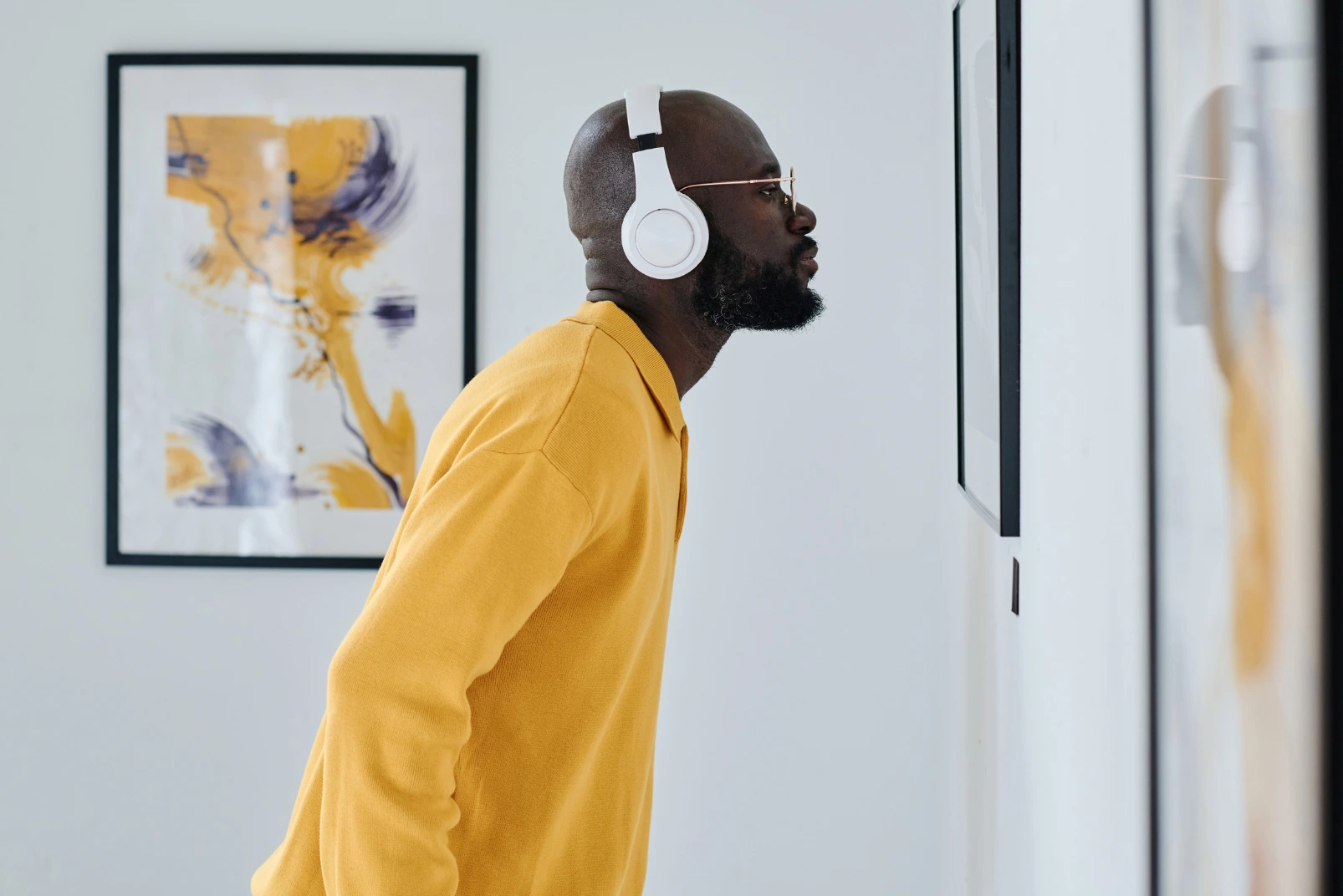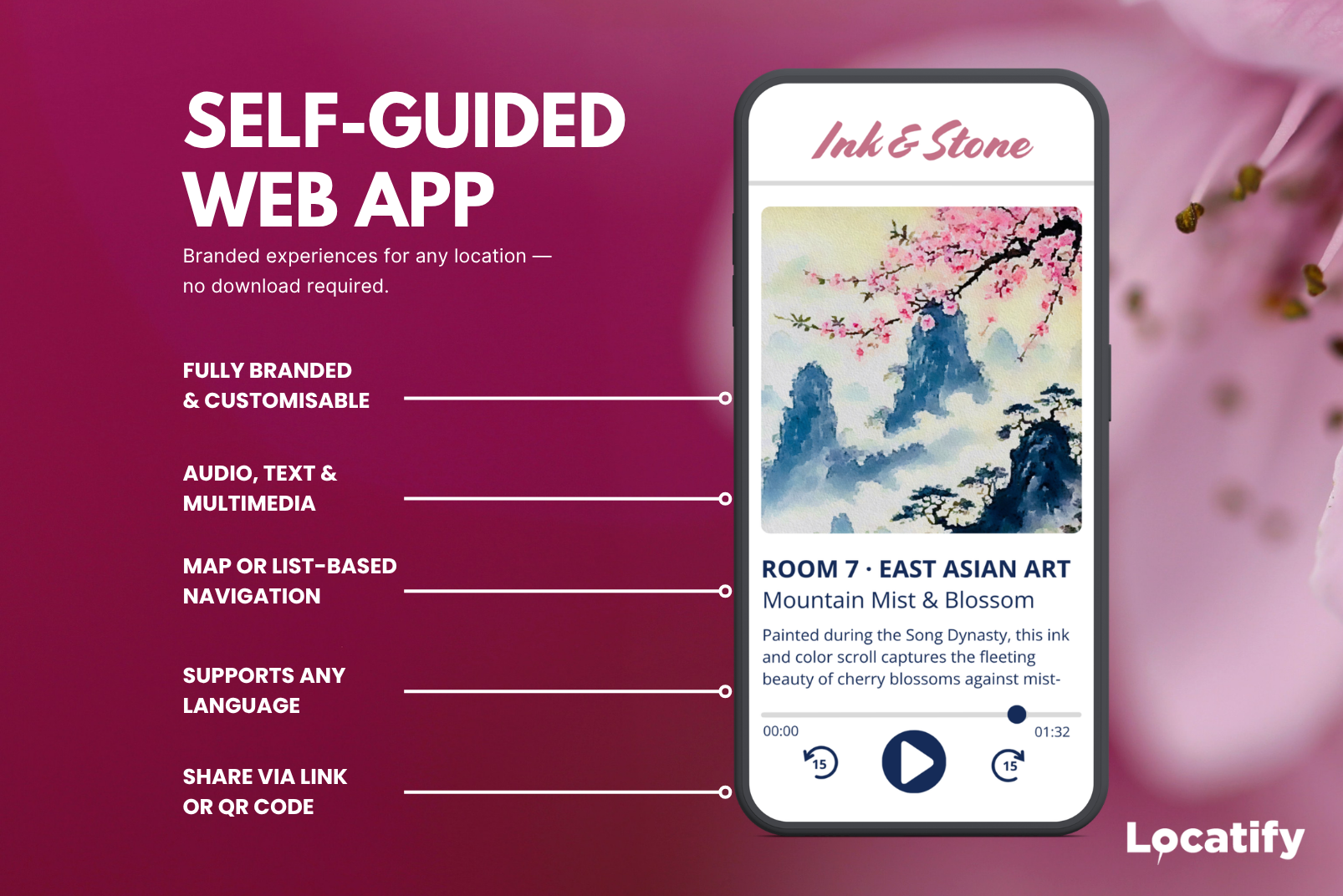
At Safnahúsið, part of the National Gallery of Iceland, a visitor exploring independently can approach an artwork and receive a question about it on their phone. A Bluetooth beacon at the station triggers the question. For a curator planning a similar stop, the harder decision is what the visitor should look at next. Take a pair of ceramic bowls: if the clue asks how one was made, can someone standing in front of the case actually see the seam along its base?
To design an interactive museum visitor journey, choose a question the collection can answer. Map the places where visitors can gather evidence, give them a choice about how to respond, and walk the route with someone who has never seen the script. A journey works when a visitor can enter midway, skip a stop, and still leave with something specific they noticed in the gallery.
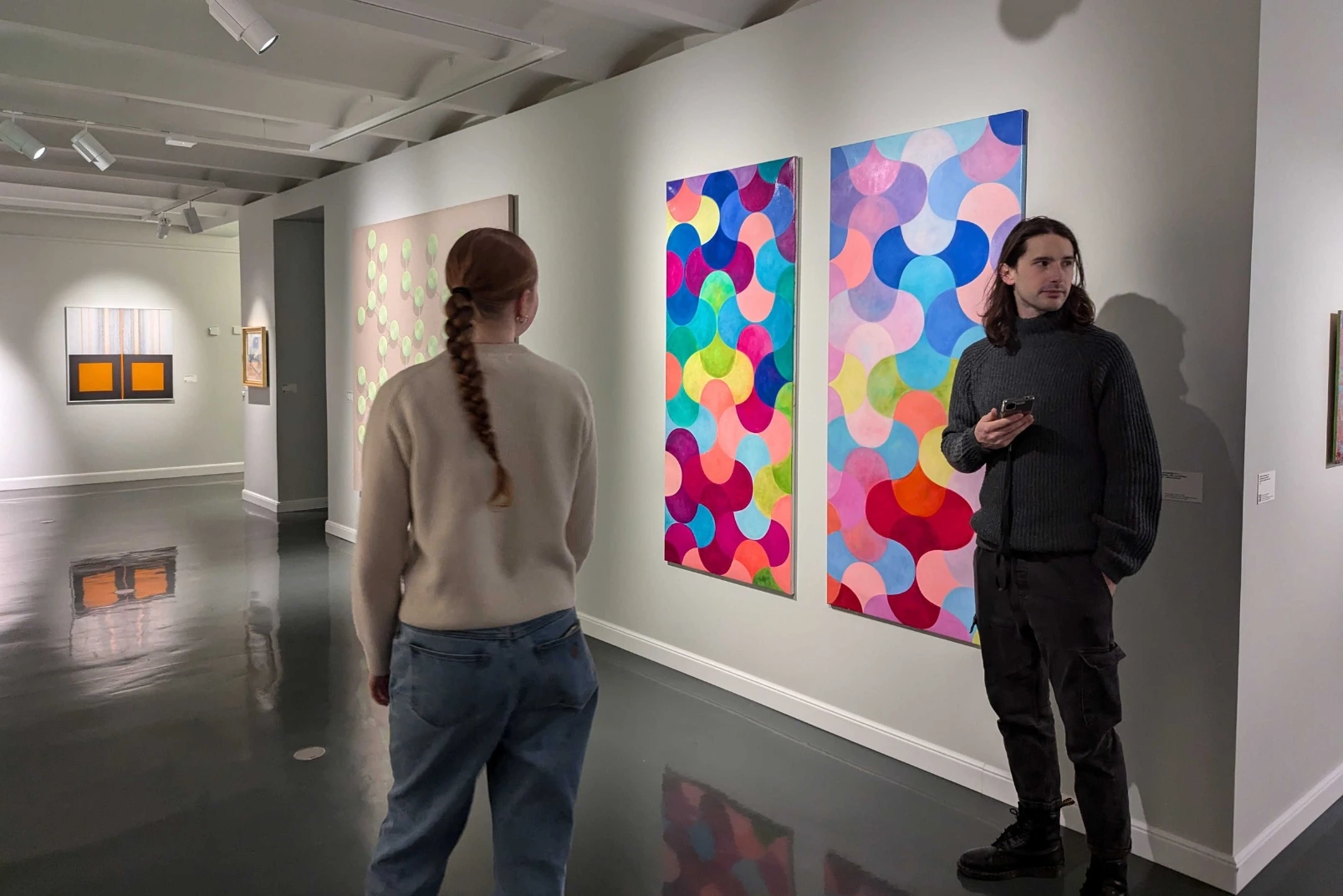
Choose the observation the visit should make possible
Start the brief with a sentence a visitor might say over dinner. “I could tell which bowl came from a mold because I found the seam” gives a curator, a designer, and a front-of-house colleague the same goal. “Increase engagement with ceramics” leaves each of them designing a different experience.
Ask the curator to identify which detail bears the interpretation, where it is visible, and how certain the attribution is. A tool mark may support a particular manufacturing method while leaving the maker’s identity unknown. Preserve that distinction in the answer. Invite a visitor to distinguish the observation from the interpretation. That makes uncertainty part of the intellectual experience.
Choose an interaction that earns its place. A prompt belongs on the route if it changes what people look for, whom they listen to, or how they connect two objects. If the answer can be copied straight from the first line of the label, try a comparison, a change of viewpoint, or a question about evidence instead. For examples of the wider format, see museum and cultural scavenger hunts.
Map the decisions visitors make between objects
Walk from the entrance to the first object with a floor plan and a pencil. Mark the point where someone learns that the experience exists, the first place they can comfortably stop, and the first fork where two directions look equally plausible. At each fork, write the question a visitor is likely to ask. “Is this the start?” calls for a different sign than “Can I do just this room?”
Design for the visitor entering from the opposite door. Place a local title or identifying image on each stop. Replace “as you saw earlier” with the object’s name and a short reminder. Where order matters, tell the visitor why. A comparison between an early sketch and a finished print may deserve a suggested sequence. Two independent artist interviews can be visited in either order.
Put the route on the gallery floor before commissioning media. Ask one colleague to play a visitor who has ten minutes and another to use the route while accompanying a child. Watch where the two routes diverge. If a family finishes the activity while standing in a doorway, move the moment of response to a wider spot with a view of the same object.
Give each stop one interpretive job
Use this sample sequence for a small exhibition on making and repair. The objects and prompts are illustrative.
| Stop | Visitor prompt | What the interpretation adds |
|---|---|---|
| Repaired vessel | “Follow the repaired line with your eyes. Where does it change direction?” | A detailed image identifies the join and explains which part of the repair is visible. |
| Two workshop tools | “Which tool could leave a mark like the one on the vessel? Compare their working edges.” | An illustrated answer distinguishes a plausible match from evidence of the actual tool used. |
| A second repaired object | “Would you display the repair facing the room? Pick a position and explain your choice.” | Two short curatorial readings introduce the display decision and its trade-offs. |
In the first stop, allow a pause before revealing the detailed image. In the second, give the visitor enough visual evidence to reason. In the third, accept more than one defensible answer. Scoring that final choice as right or wrong would undo the purpose of the stop. A facilitator can use the same three prompts on printed cards if the group prefers conversation.
Select technology at the point where it helps
A printed number paired with a stop list gives visitors deliberate control over what they open. A QR code can work well at a gallery entrance where visitors have room to pause. A shared screen can suit a pair comparing enlarged details. Test each choice in its actual location. A beautifully legible image on a designer’s monitor can be difficult to see on a phone under gallery lighting.
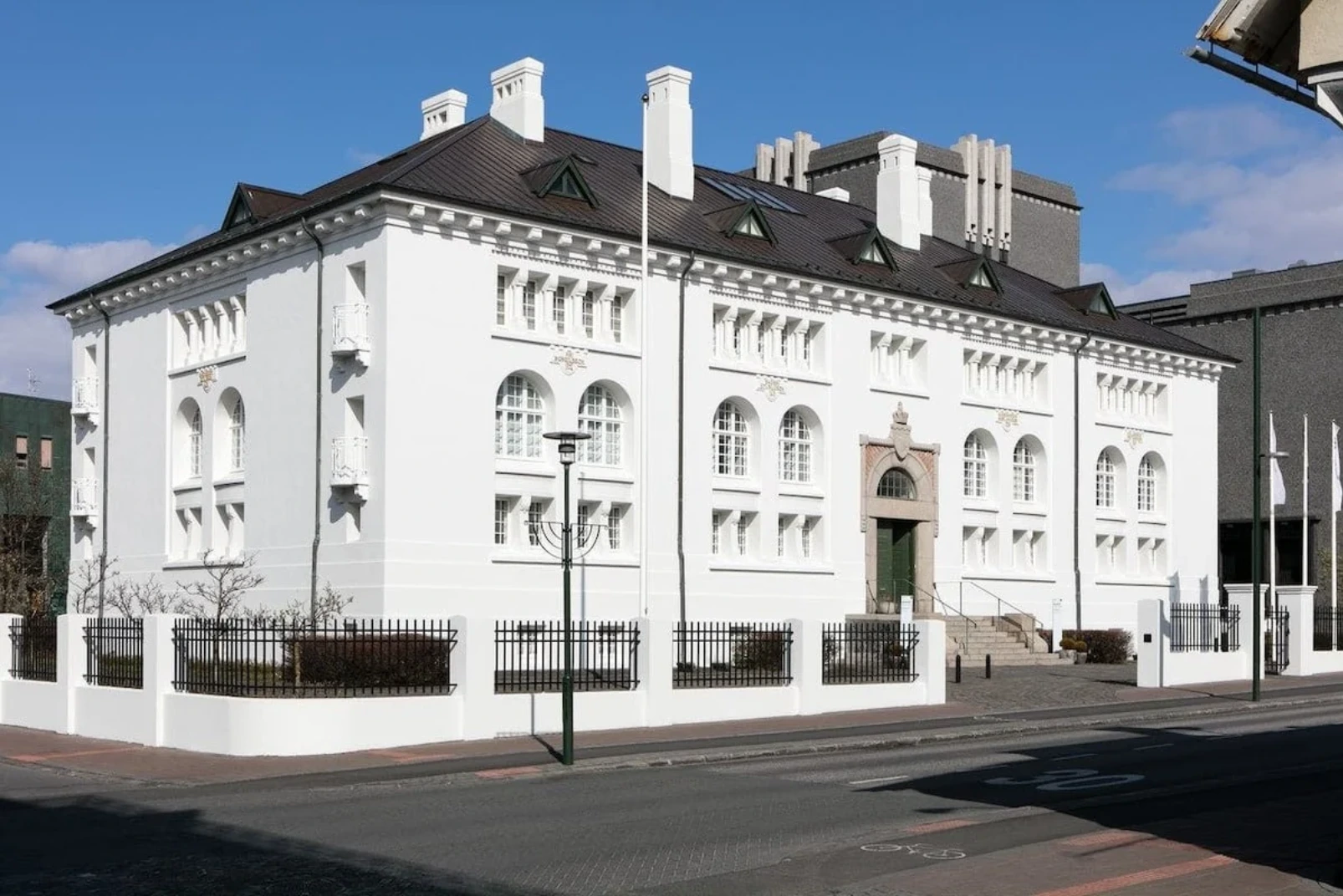
At Safnahúsið, the decision to use a game grew out of the exhibition brief. The exhibition team wanted to serve independent visitors and introduce game-based learning. It worked with Locatify on a branded treasure hunt app for an interdisciplinary exhibition. The relevant question for another museum is whether its own collection offers a puzzle worth pursuing. The project’s rationale and implementation are described in the National Gallery of Iceland case study.
Offer a second way into the same idea
Examine the demands hidden in each prompt. Does it require hearing a recording, distinguishing two colors, reaching a tiny code, or standing for several minutes? Give the visitor another way to work with the same evidence. For the vessel, an enlarged image with a written description of the irregular join can support the same discussion about repair. For an interview, place a transcript beside the audio control and identify the speaker.
W3C explains how a text alternative can convey equivalent information for prerecorded audio-only content, including relevant sounds. Give whoever prepares the transcript access to the final edited audio. An approved script can miss a last-minute change in the recording or the sound of a tool that the speaker asks the visitor to recognize. See W3C’s guidance on prerecorded audio.
Test for understanding on the gallery floor
Give a first-time tester an ordinary invitation such as “Explore this room for a few minutes.” Hold back the staff explanation. Record where they find the first stop, which object they think the prompt refers to, whether they can locate the evidence, and how they resume the visit. At the exit, ask “What did you notice that you might otherwise have missed?” Record the answer in the visitor’s own words, with their permission.
Use the observations to decide what to change. If someone opens the correct stop but looks at the adjacent vessel, revise the identifying image. If they locate the repair yet cannot explain what the guide added, revise the interpretation. If people skip one stop because a bench offers a better view of the next, consider recognizing that as a legitimate short route. A completion count alone cannot tell you which change is warranted.
The finished journey brief should fit on a gallery plan with an accompanying stop list. Each stop needs a visible object, a question, evidence, an alternative way to participate, and a named person who can revise it when the display changes. With those decisions in hand, compare the delivery options in Locatify’s museum solutions.